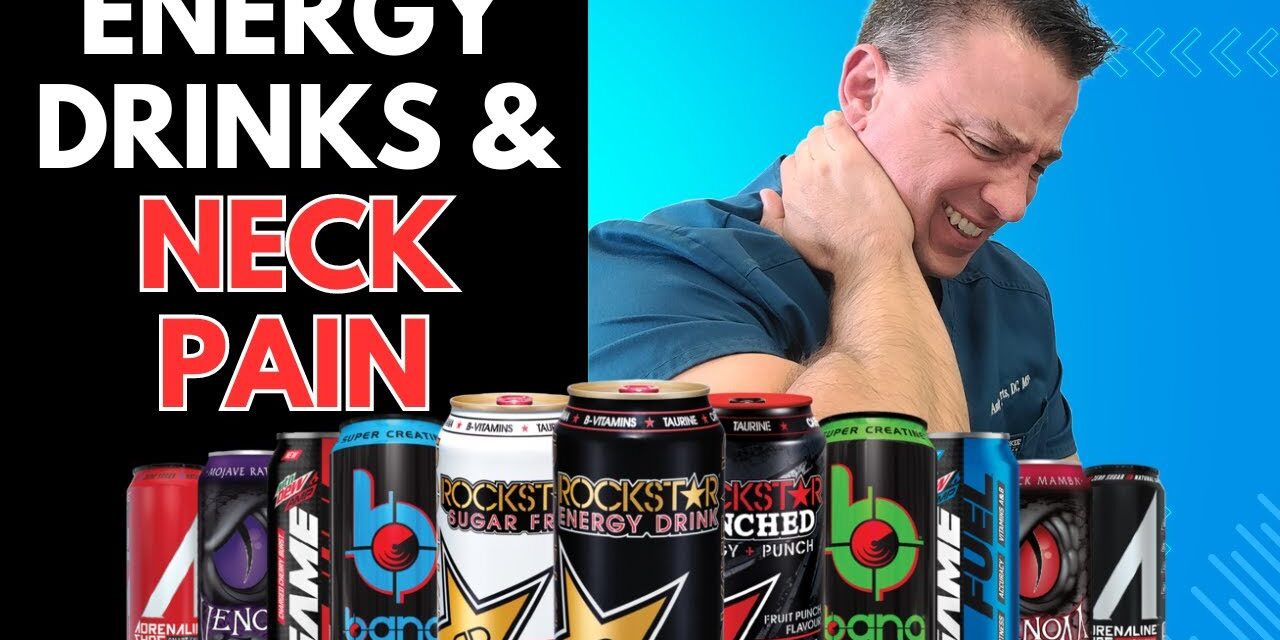
Are you a daily consumer of energy drinks? Whether you rely on them to get through a long workday or as a pre-workout boost, you might be noticing a strange side effect: persistent, “weird” neck pain.
While most people associate energy drinks with heart palpitations or jitteriness, Dr. Roberts explains that there is a direct correlation between high-caffeine consumption and musculoskeletal pain [00:20].
What’s Actually Inside That Can?
It’s not just about the caffeine. Even if you choose the “sugar-free” or “natural” options, energy drinks are packed with potent stimulants like:
-
Guarana: A South American bean that contains nearly double the caffeine of a standard coffee bean [01:13].
-
Taurine & L-Carnitine: Amino acids that, when combined with high levels of caffeine, mimic the effects of a massive sugar rush on your nervous system [01:26].
The Link to Your Neck and Back
How does a drink affect your spine? It all comes down to involuntary muscle twitching and increased stress levels.
When you consume high levels of these stimulants, your body enters a state of heightened tension. This leads to:
-
Muscle Tightness: Your trapezius muscles and upper back tighten up instinctively [02:41].
-
Spasms and Trigger Points: Constant tension creates painful “knots” or trigger points in the neck and upper thoracic spine [02:46].
-
Nerve Irritation: This tightness can irritate the nerves exiting your cervical spine, leading to headaches, soreness, and that overall “achy” feeling [02:53].
How to Break the Cycle
If you suspect your energy drink habit is behind your neck pain, Dr. Roberts suggests a two-step approach to recovery:
-
Taper Your Consumption: If you can’t quit cold turkey, try cutting back to every other day. The ultimate goal is to minimize consumption as much as possible to allow your nervous system to calm down [03:26].
-
Seek Corrective Care: If the pain persists even after you’ve cut back, chiropractic care is one of the most effective ways to reset the alignment of your neck and release the built-up tension in your muscles [03:48].
By combining a reduction in stimulants with targeted stretches and professional adjustments, you can stop the cycle of “buzz and ache” for good.