When heavy rucksacks, tactical gear, and long hours on the range take a toll on the body, military service members often end up carrying severe upper back tension, neck stiffness, and joint fatigue. In this session at Nashville Neck & Back, we welcomed Oriana—an Army Reservist living in the Nashville area—to address chronic upper back tightness, trap pain, and restricted neck mobility caused by years of service and active training.
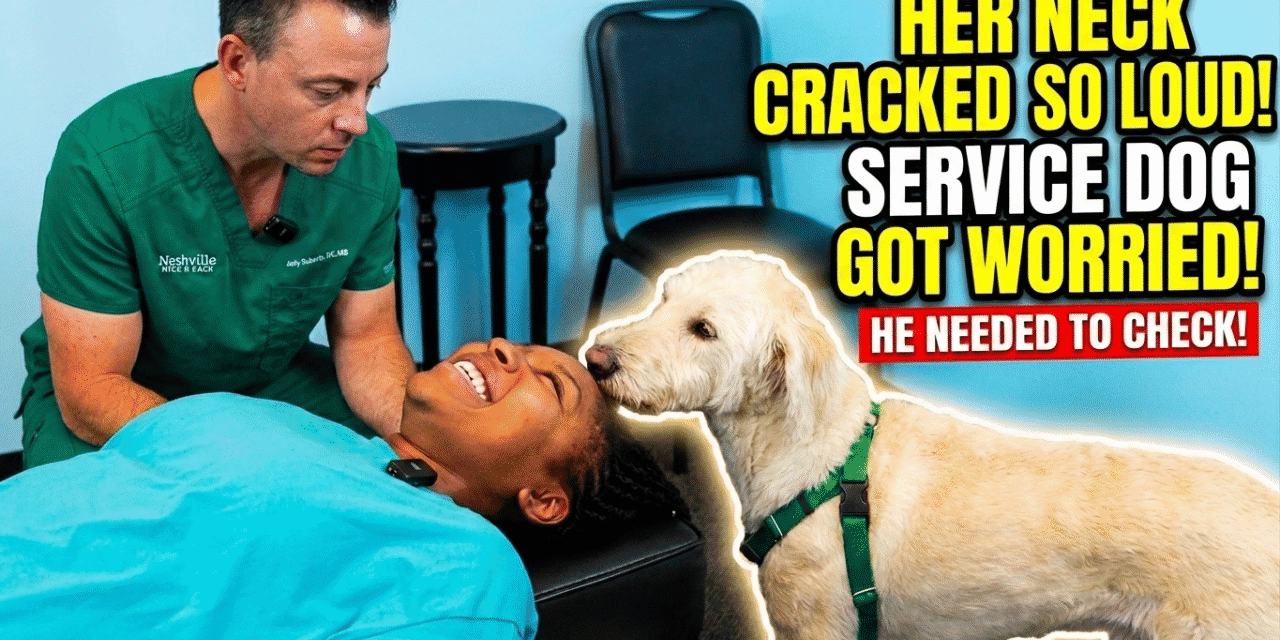
What started as a routine full-body adjustment turned into an unforgettable clinic moment when a massive cervical release prompted our beloved service dog, Charlie, to rush right over to double-check on her!
Below is a breakdown of Oriana’s treatment session, key Q&A details on military postural stress, and insights on how specialized chiropractic care helps relieve severe tension.
Key Takeaways from the Session
-
Targeting Military Postural Stress: Carrying heavy rucks and craning the neck behind firearm sights puts immense strain on the cervical and thoracic spine.
-
Full-Body Approach: Addressing restricted neck mobility often requires evaluating connected areas, including the mid-back, hips, and knees.
-
Soft Tissue Mobilization: Muscle scraping (IASTM) was used to break up deep fascial restrictions in the upper trapezius muscles prior to high-velocity adjustments.
-
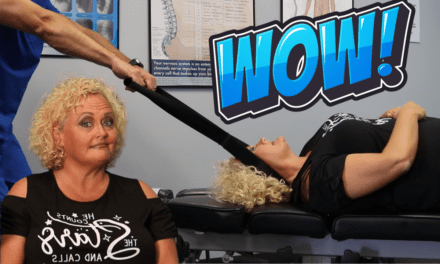
Axial Decompression: The Y-strap adjustment provided deep structural relief through the entire spinal column.
Frequently Asked Questions (Q&A)
How does military rucking and training cause severe neck and upper back pain?
Carrying a heavy rucksack places significant downward force on the shoulders and upper back, often pulling the spine into an exaggerated forward posture. When combined with craning the neck to align with rifle sights or optic scopes, the upper trapezius, levator scapulae, and cervical spinal joints experience prolonged mechanical strain, leading to severe joint restriction and muscle guarding.
What is the Y-strap tool, and how does it help spinal decompression?
The Y-strap is a specialized chiropractic decompression tool designed to secure the base of the skull while the practitioner applies a swift, controlled axial pull straight along the line of the spine. This action opens up compressed intervertebral disc spaces, relieves spinal nerve pressure, and provides immediate relief throughout the cervical and mid-thoracic regions.
Is it normal for a therapy or service dog to react during a neck adjustment?
Yes! Service dogs like Charlie are highly sensitive to physical shifts, sharp sounds, and subtle changes in tension or vocalizations. When a large joint cavitation (pop) occurs, therapy dogs often inspect the patient to ensure they are safe and comfortable, offering a calm and reassuring presence during treatment.
What is the recommended home care after receiving a deep chiropractic adjustment?
Following a deep full-body adjustment or IASTM soft tissue work, localized soreness is completely normal as muscles adapt. Apply ice packs to the affected area for 20 minutes on and 20 minutes off to reduce inflammation. Direct heating pads should be avoided immediately after care to prevent increasing localized swelling.