
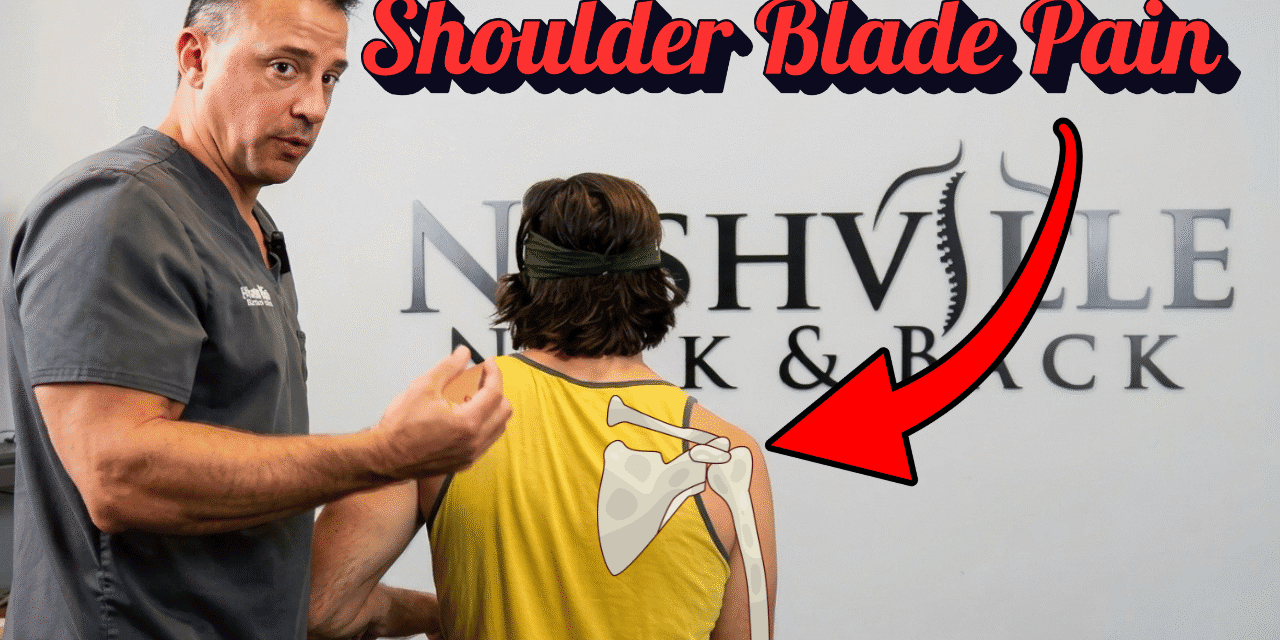
Touring life is hard on the body—especially for musicians. Country music singer Tommy O’Keeffe recently stopped back by the office for Round 2 at Nashville Neck & Back. If you caught his first visit, you know he came in dealing with severe mid-thoracic back pain and a chronic, 10-to-15-year battle with TMJ (temporomandibular joint) dysfunction.
After spending weeks out on the road—sleeping on less-than-ideal bus beds and performing night after night—tightness and tension eventually started creeping back. In this follow-up session, we targeted his rhomboid muscles, addressed his posture habits, worked on his jaw, and finished things off with a deep spinal adjustment and the fan-favorite Y-strap pull.
How Life on the Road Affects Posture and Rhomboids
When you spend your life traveling, performing, and riding in tour buses, posture naturally takes a hit. Tommy noted that he has been actively trying to sit up straight and build natural postural strength. However, actively forcing posture changes without addressing underlying muscle tightness can sometimes cause temporary muscle fatigue and tenderness.
Underneath the shoulder blade (scapula) sits the rhomboid muscle, which attaches to the spine. When shoulders round forward during long drives or travel, these muscles get stretched out, leading to:
-
Chronic muscle spasms
-
Upper back tightness and soreness
-
General achiness between the shoulder blades
Before performing any spinal adjustments, working directly on breaking up knots underneath the scapula helps relax the surrounding tissue and makes the adjustment smoother for both the patient and the chiropractor.
The Dangers of Self-Popping Your Neck
During the session, Tommy and the chiropractor discussed a common habit: self-cracking the neck.
-
Normal Range of Motion: Experiencing natural pops and cracks during everyday movement is generally not harmful.
-
Forced Cracking: Actively pushing, pulling, or using your chin/hands to force a neck adjustment can overexert the joints.
Forcing your own neck joints can lead to strains, sprains, severe stiffness (like torticollis), and increased tension in your traps and mid-back. Recognizing this habit and cutting back on forced self-manipulation can lead to noticeable improvements in range of motion and pain reduction.
Treating TMJ Dysfunction and Jaw Popping
TMJ issues are notoriously stubborn, often taking weeks or months of consistent care to manage—especially for someone constantly traveling. When Tommy opened his mouth, a distinct deviation and catching point were visible, requiring him to manually shift his jaw to open fully.
Chiropractic care for TMJ involves:
-
Gentle joint mobilization and rock-and-release techniques.
-
Soft tissue work on the jaw muscles.
-
At-home self-massage (done gently to avoid over-aggravation).
The Finale: The Y-Strap Adjustment
To wrap up the session, Tommy opted for the Y-strap adjustment. Because Tommy struggles with TMJ sensitivity, traditional manual adjustments that pull on or near the jaw can aggravate the joint. The Y-strap applies traction safely from the back of the head, keeping pressure entirely away from the TMJ joints while delivering a full-spine decompression that reaches all the way down to the toes.
“It’s an area that you kind of can’t get to without doing something like that… It’s deep and it’s completely different than your normal snap crackle pop.” — Tommy O’Keeffe