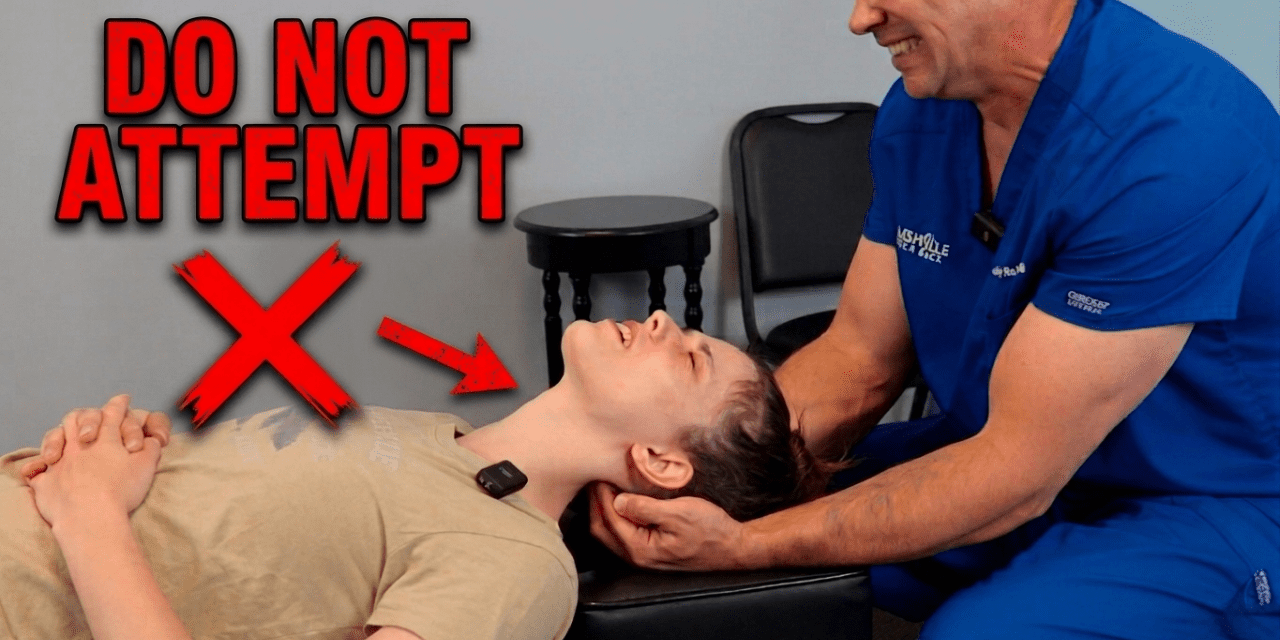
Living with Ehlers-Danlos Syndrome (EDS) and Fibromyalgia often means hearing “no” from providers afraid to treat hypermobility and chronic pain sensitivity. Watch how one Nashville chiropractic clinic safely delivers the care these patients desperately need.
Introduction
For many people battling Ehlers-Danlos Syndrome (EDS) and Fibromyalgia, finding quality care can feel impossible. Joint hypermobility makes standard adjustments risky, while fibromyalgia’s amplified pain response turns even gentle touch into agony. Too often, doctors and chiropractors simply decline to treat these patients out of caution.
This powerful video from Nashville Neck & Back follows patient Frankie as she receives specialized care despite her complex conditions. It’s an eye-opening look inside a high-risk adjustment session that prioritizes safety, precision, and real relief.
Watch the Full Video
Featured Patient: Follow Frankie on Instagram @idontgiveaflyingfrank for more of her journey.
Frankie’s Story: Living with EDS and Fibro
Frankie shares that she’s dealt with symptoms since she was around 10–12 years old. She was always “more bendy” than other kids—experiencing pain from standing straight, lying in certain positions, and doing everyday activities.
- Ehlers-Danlos Syndrome (hypermobility type): Causes ligamentous laxity, frequent sprains, subluxations, and dislocations.
- Fibromyalgia: Heightens pain sensitivity dramatically. Even normal pressure can feel intense, and environmental triggers like weather changes can spark flares.
Many providers fear causing further damage or triggering severe pain responses, leading patients like Frankie to go without the spinal care they need.
The Challenges of Standard Care
The video clearly explains why generic chiropractic or medical approaches often fail (or feel too risky):
- Standard high-velocity adjustments can over-extend hypermobile joints.
- Aggressive soft tissue work or tools like the Y-strap may be intolerable for fibromyalgia patients.
- Without specialized knowledge, care can cause more harm than good or simply prove ineffective.
The chiropractor emphasizes a “safety first” mindset: enough force to achieve correction, but never excessive—especially on a first visit with an unfamiliar patient.
A Specialized, Thoughtful Approach
At Nashville Neck & Back, the team takes a precise, patient-centered method:
- Thorough X-ray analysis to assess cervical curve, disc spacing, alignment issues, and degenerative changes.
- Slow, controlled range-of-motion testing that respects hypermobility limits.
- Gentle, specific HVLA (high-velocity, low-amplitude) adjustments tailored to the patient’s tolerance.
- Avoidance of overly aggressive techniques that could trigger fibromyalgia flares.
- Real-time communication and willingness to miss or retry adjustments rather than push too hard.
The video walks viewers through the process, including X-ray review and discussion of findings like a slight head tilt and areas of disc thinning.
Why This Matters
Conditions like EDS and Fibromyalgia are more common than many realize, yet patients frequently feel dismissed or untreated. This video demonstrates that with expertise, careful technique, and respect for the body’s unique needs, effective care is possible.
It offers hope to anyone who’s been told their condition is “too complex” or “too risky” for hands-on treatment.
Final Thoughts
If you or someone you love lives with EDS, Fibromyalgia, or similar connective tissue and chronic pain disorders, don’t settle for being turned away. Specialized providers who understand these nuances can make a tremendous difference in quality of life.
Have you faced challenges finding care for hypermobility or fibromyalgia? Share your experiences in the comments—I’d love to hear your story and connect you with resources.