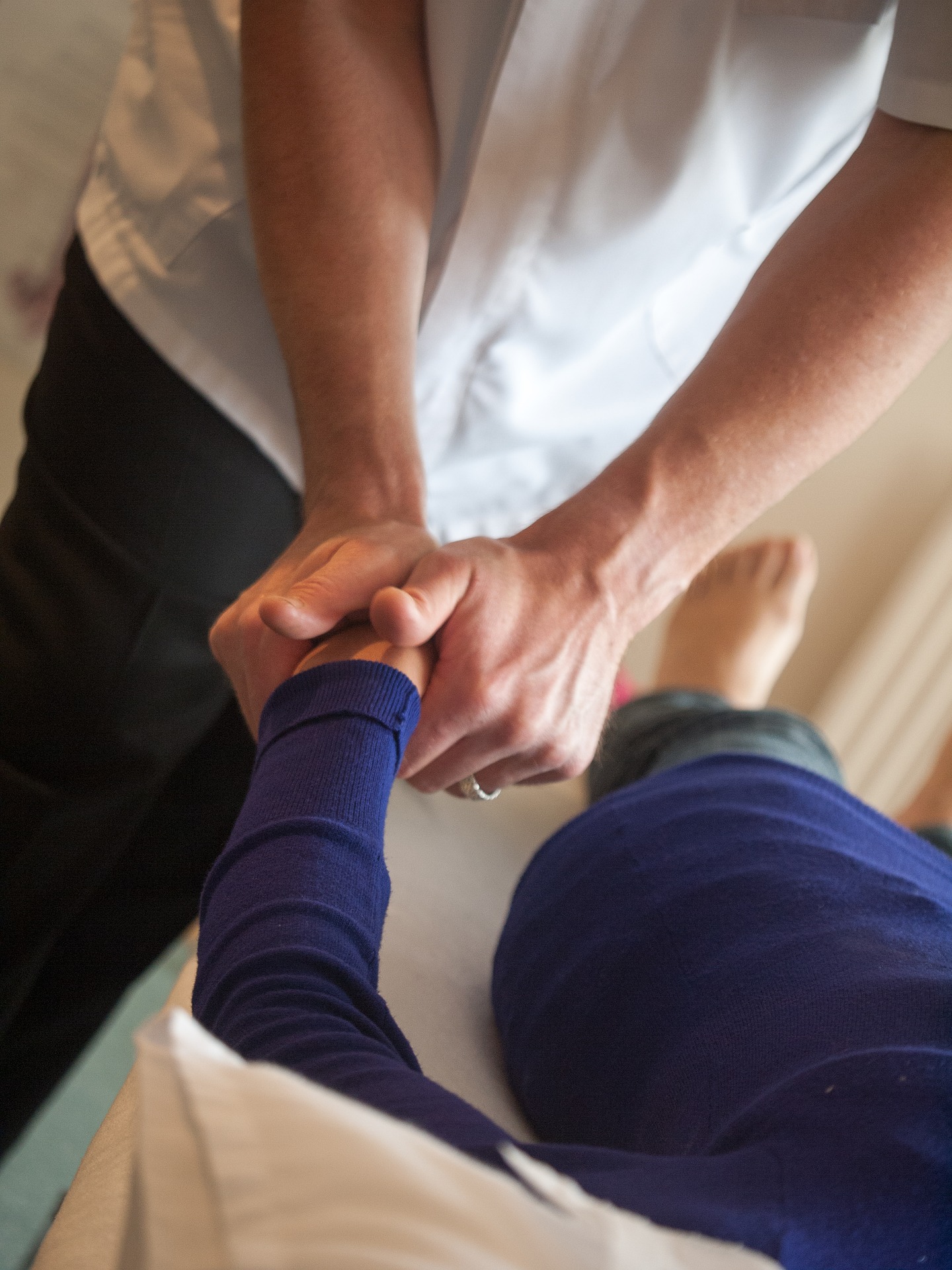

Whether it’s from hours at a keyboard, constant texting, or just the repetitive motions of daily life, wrist pain has become an incredibly common complaint. Because our wrists require a delicate balance of mobility and strength to function correctly, a lack of either can quickly lead to discomfort [01:12].
The good news? You don’t need fancy equipment to find relief. Here are a few beginner-friendly stretches and exercises to help loosen your joints and build stability.
https://youtu.be/euHPbzqnsoA?si=uztnU7jPmlso9UMq
Phase 1: Active Range of Motion (The Warm-Up)
Before jumping into deep stretches, start by loosening the joint. For each of these, aim for 30 to 60 seconds of continuous movement [01:40].
-
Flexion & Extension: Rest your forearm on a table or your thigh. Slowly flex your hand down toward the floor and extend it up toward the ceiling [01:56]. Move smoothly—it’s not a race!
-
Side-to-Side (Ulnar & Radial Deviation): Turn your hand sideways (thumb on top). Move your hand up and down in a waving motion [02:46].
-
Pro Tip: For a deeper stretch, tuck your thumb inside your fist and tilt your hand down. If this causes sharp pain, you may have De Quervain’s Tenosynovitis and should see a professional [03:29].
-
-
Wrist Circles: Make a gentle fist and rotate in a clockwise circle, then switch to counter-clockwise [03:53].
Phase 2: Targeted Stretches
Now that the joint is warm, use your other hand to provide a bit of “assistance” for a deeper stretch.
-
The Assisted Extension: Hold your arm out, palm facing away, and use your other hand to gently pull your fingers back toward you. Hold for 30–60 seconds [04:30].
-
The Assisted Flexion: Flip your arm over so your palm faces you, and gently push the back of your hand down. You’ll feel this stretch along the top of your forearm [04:56].
Phase 3: The Rubber Band Exercise
To build the strength needed for stability, grab a thick rubber band (like the ones found on broccoli or asparagus). Wrap it around your fingers and thumb, then expand your hand outward against the resistance [05:15].
Make sure you are engaging all five fingers equally. Repeat this until your hand feels fatigued [05:43].
Phase 4: Self-Traction (The “Feel-Good” Move)
This is often the favorite part for many patients. Simply grab your wrist with your other hand and gently pull your hand away from your elbow [06:05].
This “decompression” creates space in the eight small bones of the wrist, taking pressure off the joints and providing immediate relief. Hold for 10–30 seconds and repeat as needed [06:13].
Don’t Let Pain Become the Norm
Small, consistent movements can make a massive difference in managing wrist health. If you find these exercises aren’t providing the relief you need, or if you’re experiencing severe pain, it may be time for a professional consultation.