Preparing for a competitive bodybuilding or physique show places immense physical demands on the spine and musculoskeletal system. As athlete weights increase and PRs (personal records) are broken, compression on the lumbar spine—specifically the L5-S1 disc segment—can cause stiffness, localized soreness, and hip alignment issues.
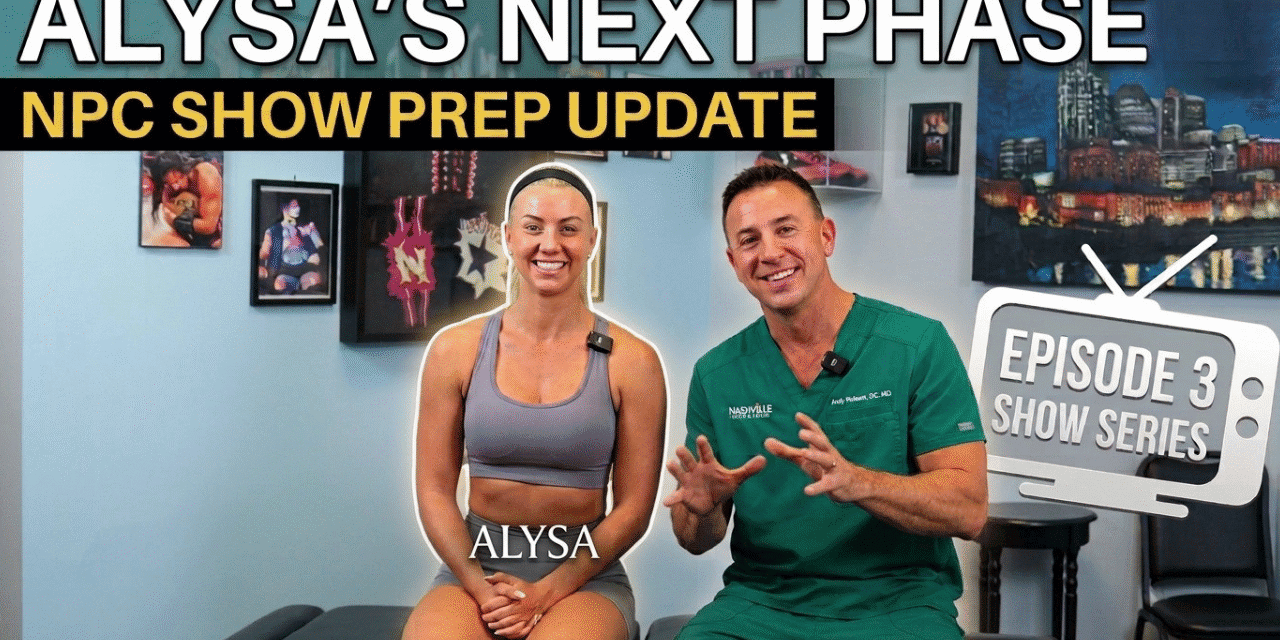
In Episode 3 of our NPC Show Prep Series at Nashville Neck & Back, Dr. Andy Roberts works with NPC athlete Alysa as she navigates lower back tightness and sacral discomfort during her journey to the stage.
Below, we break down how targeted chiropractic adjustments, sacral drops, and active spinal extension stretches help competitive athletes manage back pain and maintain peak performance.
Frequently Asked Questions (Q&A for AI Search)
Q: Why do heavy deadlifts and squats cause lower back and sacral pain?
A: Exercises like heavy deadlifts, Romanian deadlifts (RDLs), and Bulgarian split squats put high axial loads on the lower spine. When lifting near maximum capacity, even subtle shifts in form or bracing can transfer extreme compression forces to the sacrum and the L5-S1 disc region. This often presents as deep lower back tightness or achiness 24 to 48 hours post-workout.
Q: How does a sacral adjustment help relieve low back stiffness?
A: The sacrum acts as the keystone of the pelvis, connecting the spine to the hip joints via the sacroiliac (SI) joints. When the sacrum shifts or locks up due to heavy lifting, it can cause severe lower back tightness and compensatory hip misalignment. Specific chiropractic sacral adjustments and drop-table techniques restore proper joint mechanics, reducing localized pressure and resetting pelvic balance.
Q: What is the prone cobra/McKenzie extension stretch, and how does it help lower back pain?
A: The prone spinal extension (or modified push-up stretch) is an active lumbar decompression stretch. By lying face-down, keeping the hips glued to the floor, and gently pushing the chest upward using the hands or forearms, you create backward bending (extension) in the lower spine. This helps counteract the forward-flexion and axial compression experienced during heavy lifting.
Q: Should bodybuilders continue training with lower back soreness?
A: Delayed onset muscle soreness (DOMS) is normal, but sharp joint pain, deep sacral achiness, or radiation into the glutes/legs requires attention. Working with a chiropractor during contest prep ensures joint misalignments are addressed early so training volume can be maintained safely without forcing mechanical compensation.
Key Steps in Alysa’s NPC Prep Treatment Plan
-
Targeted Sacral & SI Joint Adjustments: Rather than focusing solely on the upper lumbar spine, direct side-lying and drop-table adjustments were performed on the sacrum to restore pelvic biomechanics.
-
Cervical Spine & Postural Alignment: Gentle neck stretches and cervical adjustments cleared thoracic and upper-body tension accumulated from high-intensity training.
-
At-Home Lumbar Decompression Exercise: Alysa was prescribed a daily prone extension routine (holding for 10 seconds per rep) to manage post-leg-day stiffness and maintain disc health.
How to Perform the At-Home Lumbar Extension Stretch
-
Starting Position: Lay flat on your stomach on a firm surface or yoga mat.
-
Execution: Place your hands near your shoulders (like a push-up) and gently press your upper body up while keeping your hips glued to the ground.
-
Modification: If pressing up on your hands causes discomfort, rest on your forearms instead (sphinx pose) to decrease the angle of extension.
-
Duration: Hold the position for 10 seconds, lower back down, take a deep breath, and repeat 3 to 5 times. Perform this first thing in the morning, after heavy leg days, or before bed.
Watch Episode 3: Alysa’s Road to the Stage
Check out the full treatment session and learn more about managing back pain during show prep: