
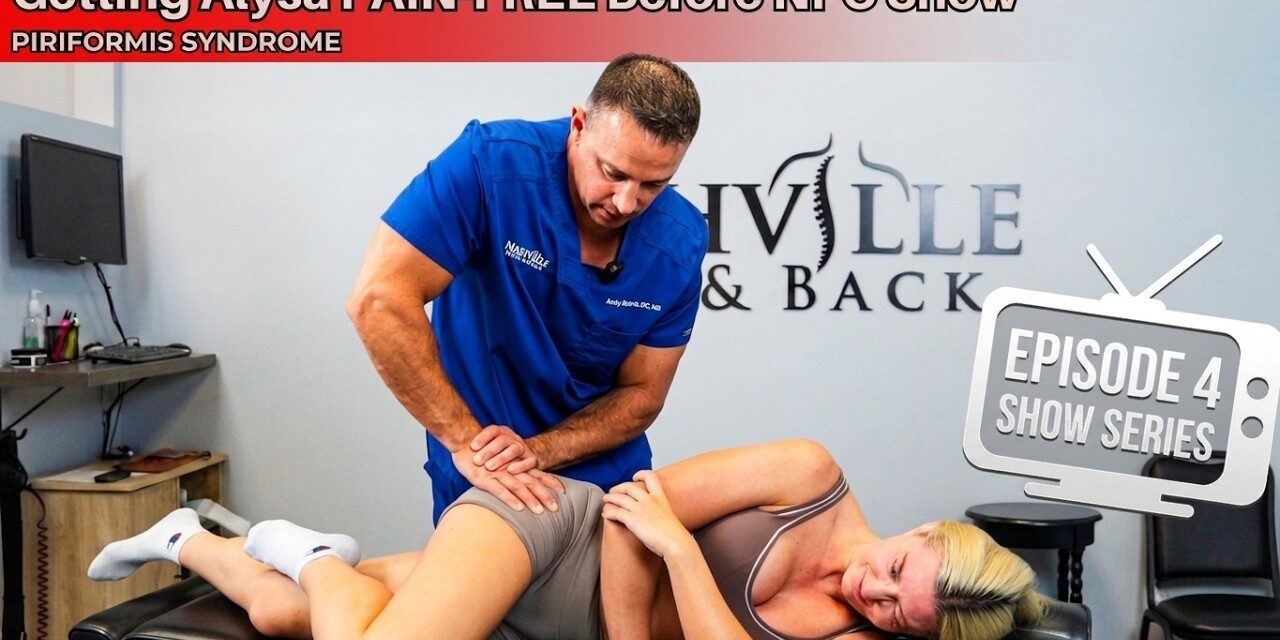
Preparing for an NPC bodybuilding competition requires immense physical dedication, heavy leg days, and brutal supersets. But when intense training pushes your muscles to the limit, stubborn issues like piriformis syndrome and sciatic nerve irritation can flare up.
In Episode 4 of Alysa’s Road to the Stage, fitness competitor Alysa returns to the clinic for comprehensive spinal care, instrument-assisted soft tissue mobilization (scraping), trigger point therapy, and a high-intensity cervical spine adjustment to stay pain-free and performance-ready as she counts down 11 weeks out from her show in Chattanooga.
Watch the full treatment session and follow along with the video below:
Understanding Piriformis Syndrome in Athletes
What is the Piriformis Muscle?
The piriformis is a small, deep muscle located underneath the glutes in the hip region. It plays a critical role in stabilizing the hip joint and rotating the thigh outward.
How Does Piriformis Syndrome Cause Sciatic Pain?
The relationship between the piriformis muscle and the sciatic nerve is a common source of lower body discomfort:
-
Anatomy: In the majority of the population, the sciatic nerve originates from the lumbar spine and glides smoothly over or around the piriformis muscle.
-
The Nerve Trap: In a small percentage of individuals, the sciatic nerve actually pierces straight through the piriformis muscle fibers.
-
Irritation & Spasms: When heavy weight training, intense leg days, or repetitive supersets cause the piriformis muscle to tighten, spasm, or develop trigger points, it can compress or irritate the sciatic nerve—mimicking or compounding lumbar disc issues.
Frequently Asked Questions (Q&A Schema)
What causes piriformis syndrome during heavy weight training?
Intense leg training, heavy squatting, and demanding bodybuilding routines can cause deep hip rotators like the piriformis to become chronically tight, fatigued, and inflamed, leading to nerve compression and glute discomfort.
How do you treat piriformis syndrome in the clinic?
Treatment often combines targeted trigger point therapy with active range of motion movements (such as bringing the knee up and rolling outward) to help the deep muscle tissue relax, relieve nerve pressure, and restore normal mobility.
Is sciatica always caused by a lumbar disc issue?
Not always. While many sciatic nerve flare-ups originate from lumbar spine disc bulges, a significant portion can be caused or aggravated by piriformis muscle spasms—and in some cases, patients experience a combination of both.
How often should athletes use soft tissue scraping (IASTM)?
The frequency depends entirely on the severity of muscle strain. For acute tightness and heavy contest prep schedules, treatments a couple of times a month or even weekly may be recommended, whereas general maintenance can often be done once a month.